Forged Letters — Information Warfare in the Three Kingdoms, Where the One Who Believes Loses
From Chapters 45 to 49 and Chapter 59 of Romance of the Three Kingdoms
The battles of Romance of the Three Kingdoms were not decided by swords and spears alone. At times, a single letter decided an army's advance or retreat. And many of those letters were forgeries. Lies written to look genuine were delivered and read — and the side that believed crumbled before the battle.
Today we read three scenes in which forged letters moved the state of a war. The fire of Red Cliffs in fact began with a single letter.
Read the Comic
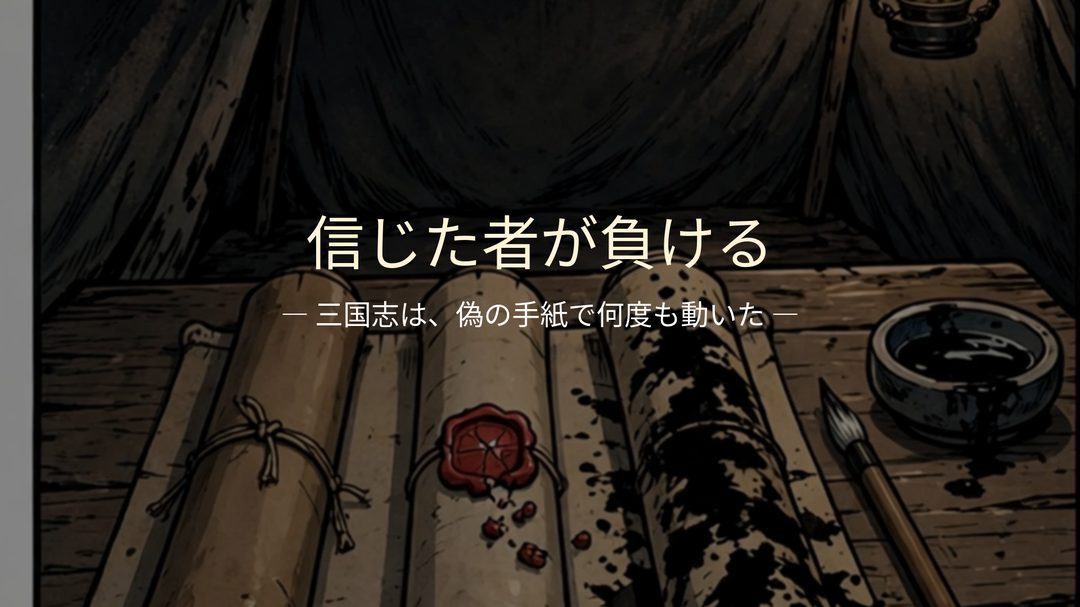
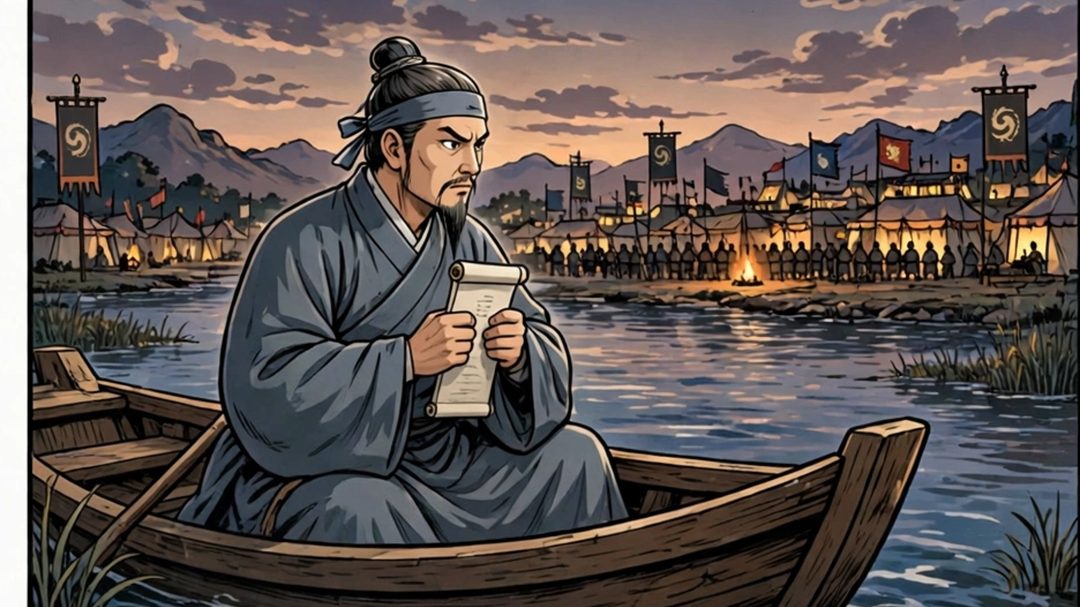
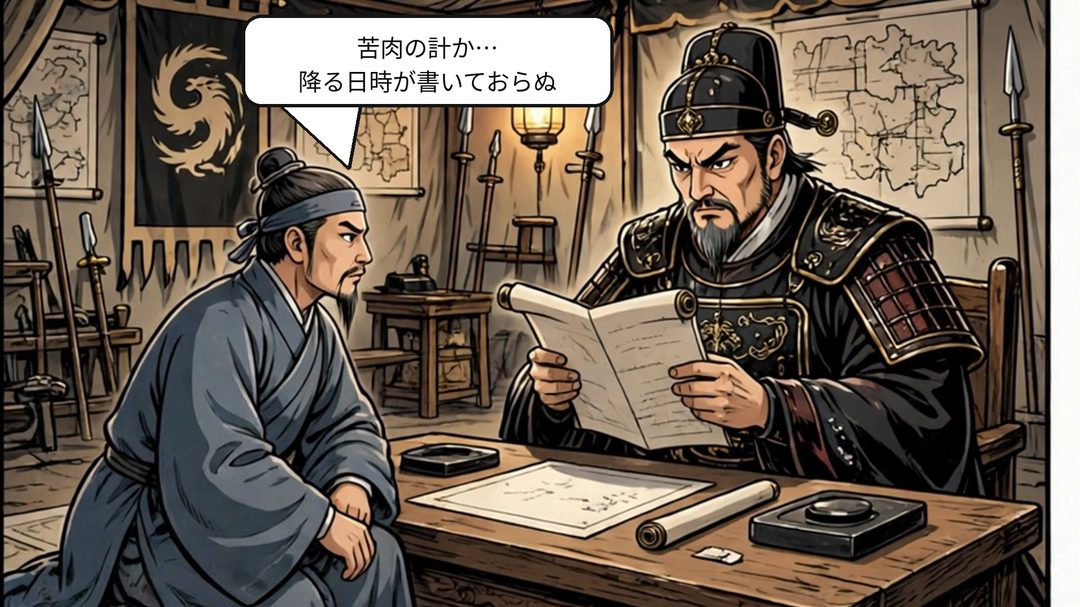
Huang Gai's Letter of Surrender — The One Who Believed Made the Outcome
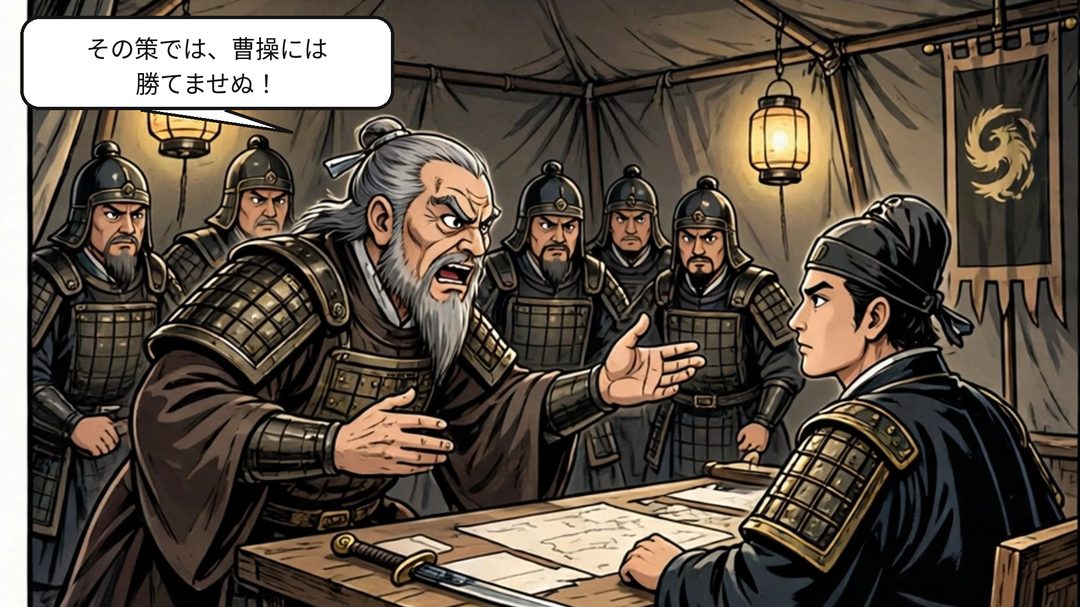
The Letter Jiang Gan Stole — Not Stolen, but Made to Be Stolen
The Blacked-Out Letter — How It Was Erased Moved a Man
Conclusion — The Letter as a Weapon
Read the Text
Huang Gai's Letter of Surrender — The One Who Believed Made the Outcome
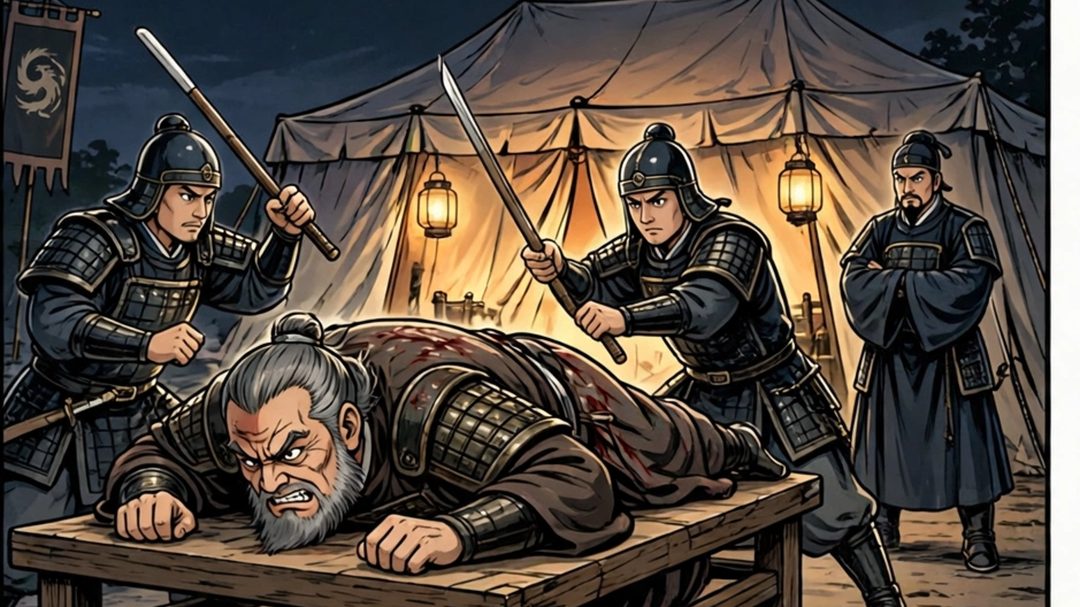
Before Red Cliffs, the veteran Wu general Huang Gai clashed with Zhou Yu at a council of war. He rejected the plan, incurred Zhou Yu's anger, and was sentenced to death. Through the generals' pleas for his life it was reduced to a beating, but fifty strokes of the staff were a grave wound. Yet this was the Ruse of Self-Injury, arranged between Huang Gai and Zhou Yu.
Huang Gai's friend Kan Ze saw through it and volunteered as secret envoy. What Kan Ze crossed the river to deliver was Huang Gai's letter of surrender. The letter said that he was an old retainer of three generations of the Sun house, that he had received an unjust punishment from Zhou Yu and bore a grudge for it, and it closed by saying he would load provisions and military equipment onto ships and come to surrender.
Cao Cao read this letter over more than ten times. Then he struck the table in anger.
Cao CaoThis is the Ruse of Self-Injury.
There was one reason he saw through it: the date and time of the surrender were not written. But Kan Ze laughed and did not flinch, and Cao Cao changed his attitude. Moreover, another report had also reached Cao Cao's ears. Cai Zhong and Cai He, planted inside Wu, had witnessed Huang Gai's punishment. The contents of the letter and his own side's report had come to match.
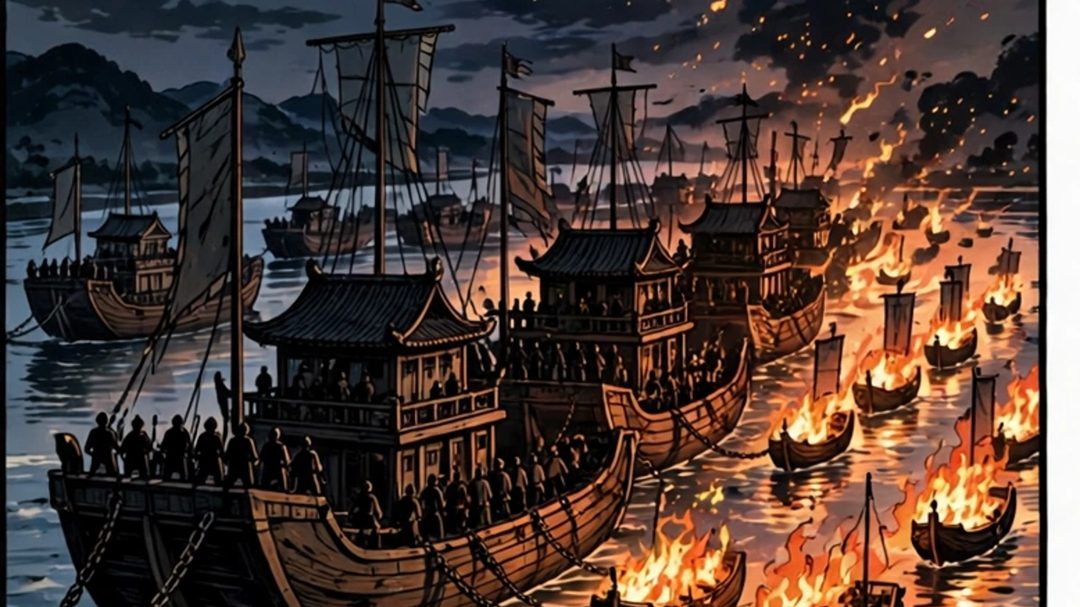
Keeping his doubts, Cao Cao accepted the surrender. On the night of Red Cliffs, Cao Cao welcomed Huang Gai's fleet, thinking them grain ships. Those ships were fire ships. The fire spread through Cao Cao's fleet. What decided victory and defeat was not Huang Gai, who wrote it. It was Cao Cao, who, doubting, in the end believed.
The Letter Jiang Gan Stole — Not Stolen, but Made to Be Stolen
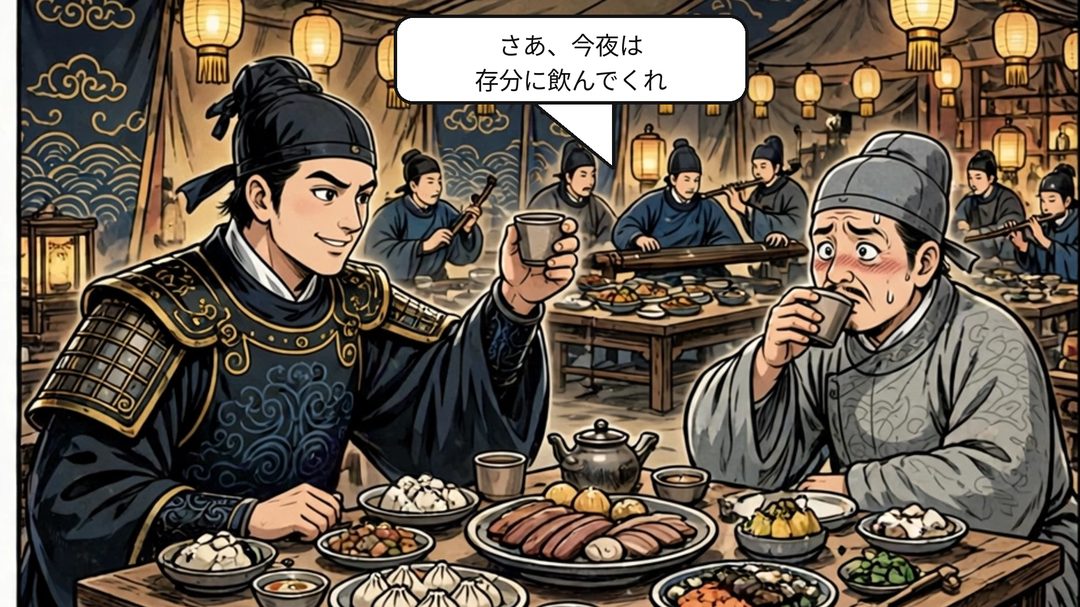
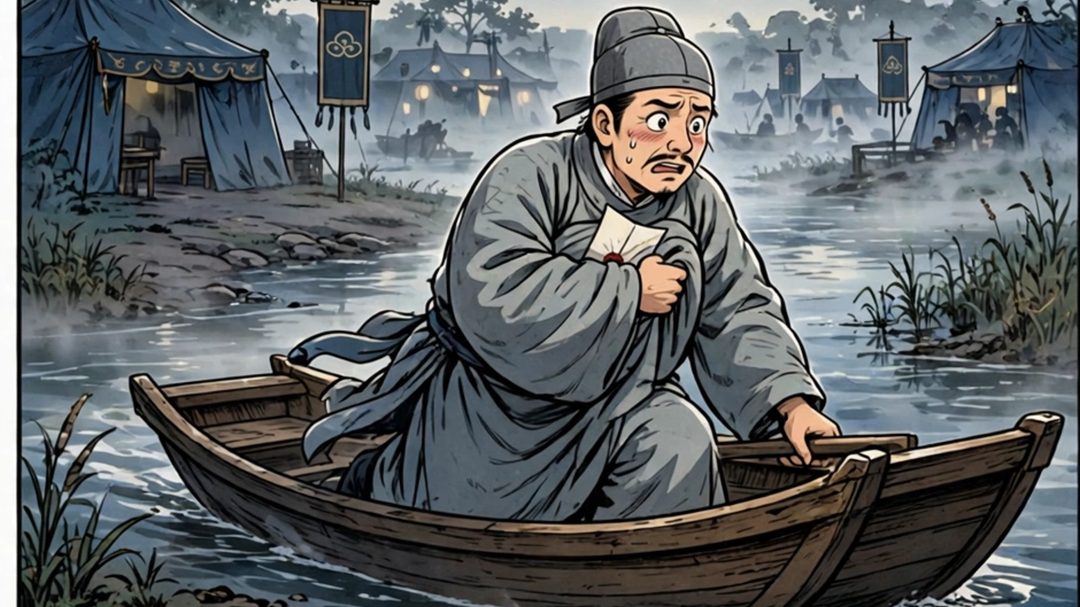
There is one more letter that moved events before Red Cliffs. This time, it was not delivered but stolen. Cao Cao's envoy Jiang Gan visited his old friend Zhou Yu to persuade him. Zhou Yu held a great banquet, got Jiang Gan drunk, and had him rest in the same quarters. Late at night, Jiang Gan found a sealed letter among the documents on the desk.
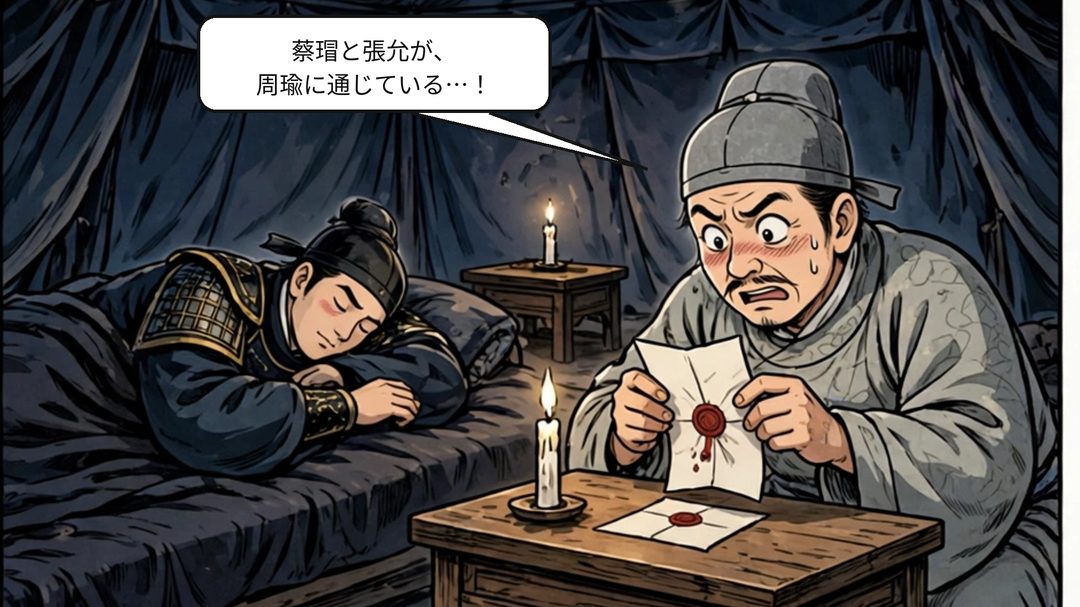
The senders were Cai Mao and Zhang Yun, the two generals in charge of Cao Cao's navy. Inside, it said the two were in communication with Zhou Yu and would present Cao Cao's head. Jiang Gan hid the letter in his breast and fled back by small boat before dawn. But this letter had been placed there to be stolen. Zhou Yu's target was Cai Mao and Zhang Yun, skilled in naval warfare.
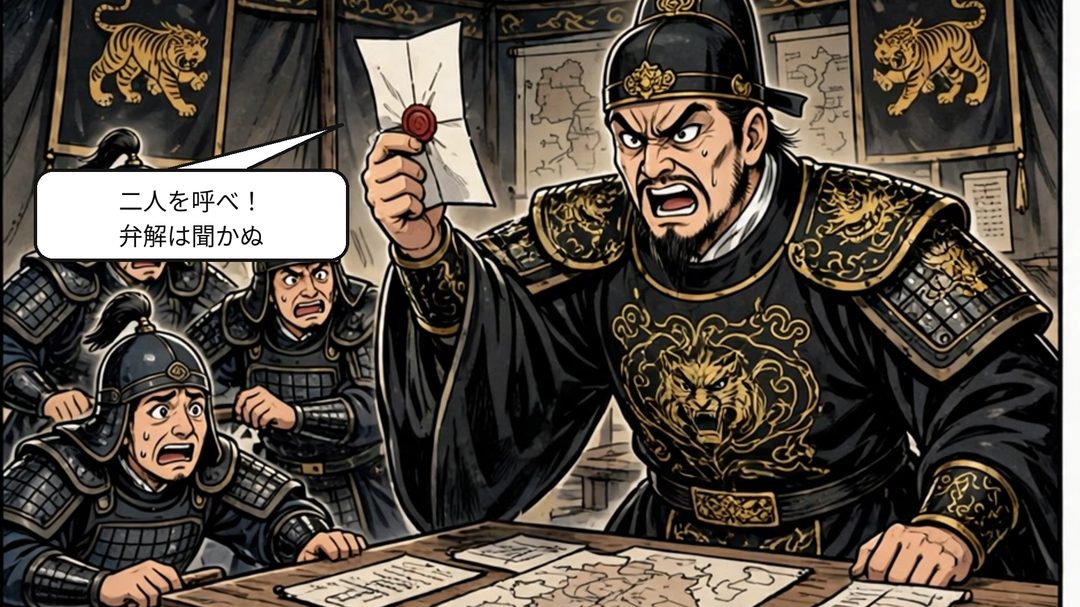
The banquet, the feigned drunkenness, the sleep-talk, even the voices of a secret discussion outside the tent — all of it was a contrivance to make Jiang Gan believe. Cao Cao read the letter, and in anger summoned the two men. Before they could make any excuse, execution was ordered. Immediately after the heads arrived, Cao Cao realized it.
He had fallen for the stratagem. But Cao Cao could not admit his mistake. He glossed it over to his generals, saying it had been punishment for the two men's negligence. He had lost the keystone of his navy by his own hand. That was the end of the stolen letter.
- b2 Jiang Gan: “Cai Mao and Zhang Yun are in communication with Zhou Yu…!” — Chapter 45, his reaction on reading the contents of the forged letter (that Cai Mao and Zhang Yun were in communication with Zhou Yu and would present Cao Cao's head). - b4 Cao Cao: “Summon the two of them! I will hear no excuses” — Chapter 45, the scene in which he summons the two and orders execution before they can make any excuse.
The Blacked-Out Letter — How It Was Erased Moved a Man
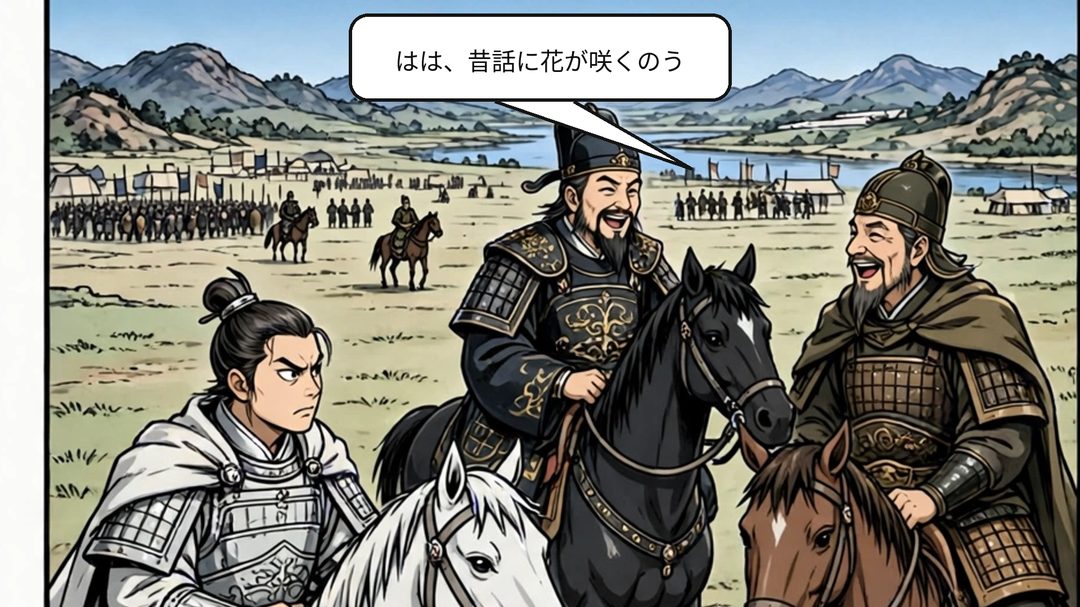
The third is three years after Red Cliffs, on the banks of the Wei River in the west. The allied army of Ma Chao and Han Sui faced Cao Cao. Cao Cao first showed himself talking only of old times with Han Sui alone, in front of the lines. He spoke not a word of military matters. Even so, Ma Chao's suspicion was born. Then the strategist Jia Xu proposed a stratagem.
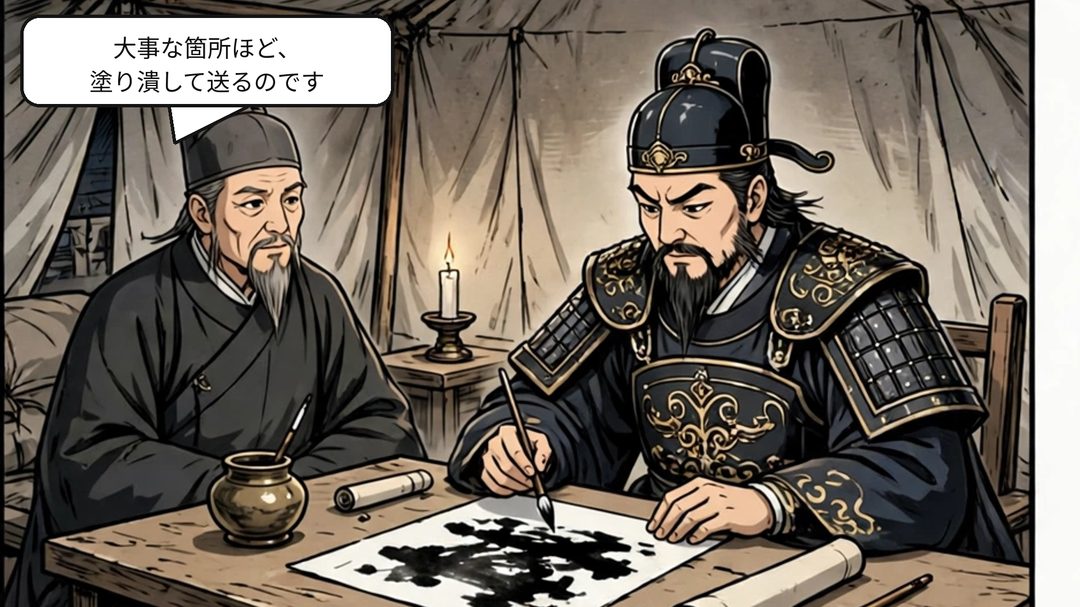
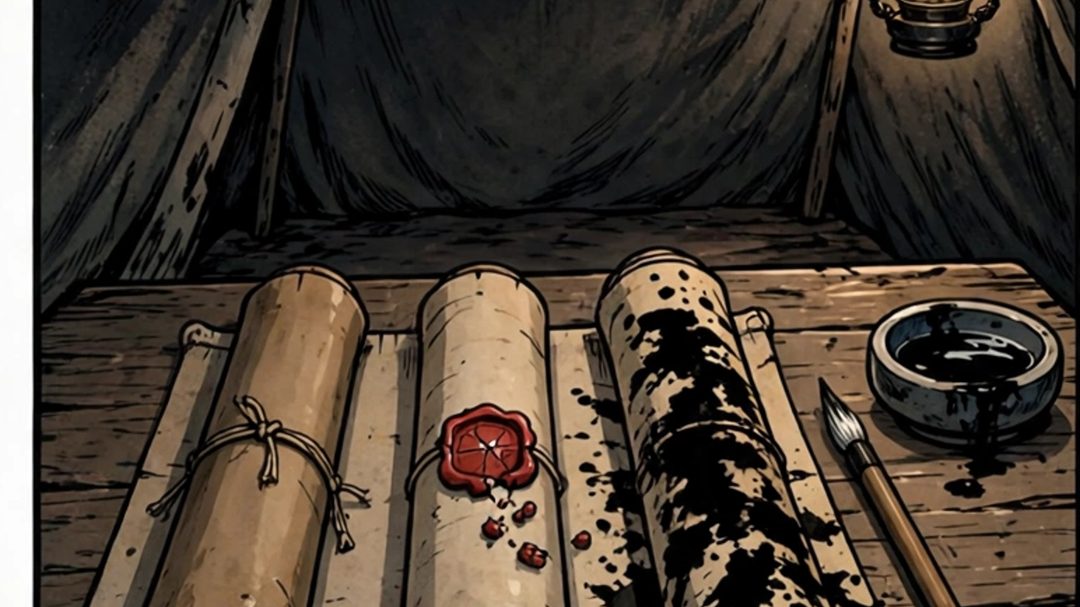
Cao Cao would write, in his own hand, a letter addressed to Han Sui alone.
Jia XuAnd the more important the passage, the more you should black it out yourself before sending it.
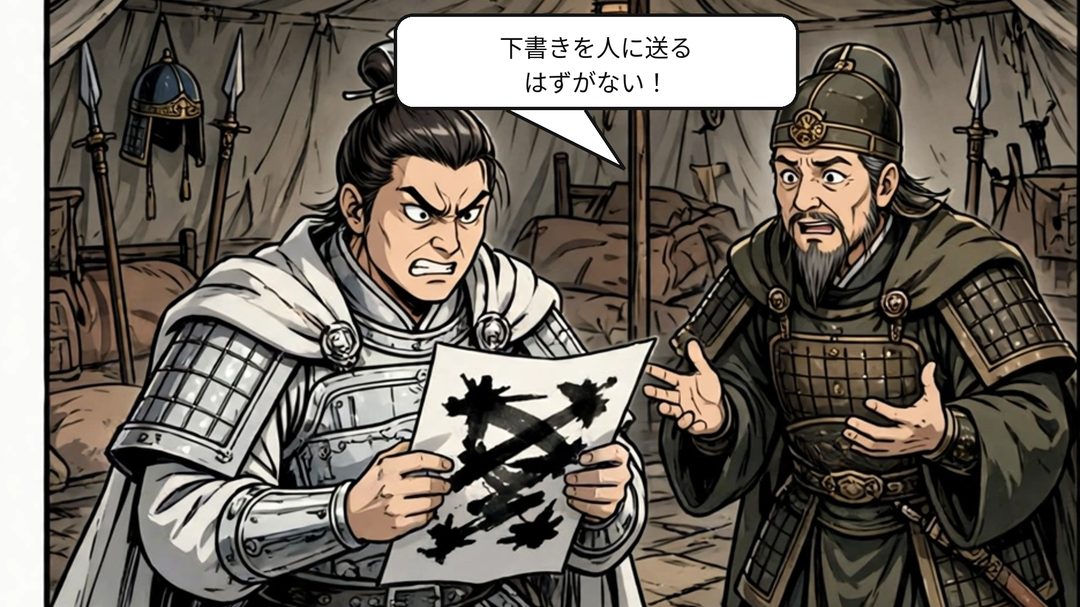
The envoy was deliberately accompanied by many men, and word of the letter reached Ma Chao's ears. Ma Chao pressed Han Sui, took the letter, and read it. Opening it, he found that the crucial parts had all been blacked out. Ma Chao said:
Ma ChaoNo one sends a draft to another person.
Uncle, you must have erased the parts you did not want me to know, he said. Han Sui denied it, but the erased characters allowed no excuse. The terror of this letter was not in what was written. The blacked-out parts themselves created the suspicion. Suspicion piled up, and in time the alliance collapsed from within.
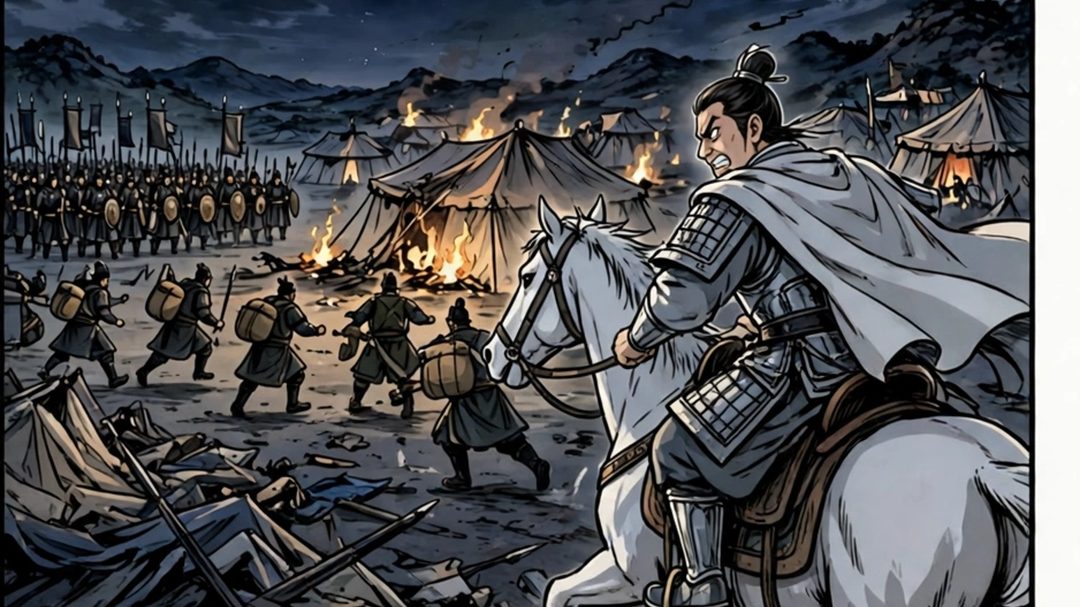
Han Sui was attacked by Ma Chao, lost his left hand, and the two became enemies. Cao Cao crushed the collapsed alliance in one stroke.
- c3 Ma Chao: “No one sends a draft to another person!” — Chapter 59, a shortened rephrasing of Ma Chao's words, “How could anyone send a draft to another?”
Conclusion — The Letter as a Weapon
Laying the three letters side by side, a shared character comes into view. A letter travels, until it arrives, touched by no one's eyes. And once it arrives, it is completed within the reader's heart. Huang Gai's letter touched a believing heart and became fire. Jiang Gan's letter touched a stealing heart and took off an ally's heads.
The blacked-out letter touched a doubting heart and split an alliance. Forged letters are strong not because their writing is skillful. It is because they have first read what lies in the reader's heart. Victory and defeat in the Three Kingdoms were decided in places the sword could not reach.
Sources and Basis
The Source Story
Made mainly from the texts of Chapters 45, 47, and 59 of Romance of the Three Kingdoms (the texts collected on Wikisource), with the key points of Chapter 46 checked against the commonly circulated Mao edition.
Distinguishing the Romance from the Records
The analysis in this article covers only events within the Romance. No comparison with the historical record is made; it is a reading that follows how letters and documents worked within the story.